Loneliness Has No Age: A Message to Every Boy, Girl, Man, Woman, and Older Person Who Feels Alone
Sometimes, the loneliest people are not the ones sitting alone. They are the ones who have learned to hide how lonely they feel.

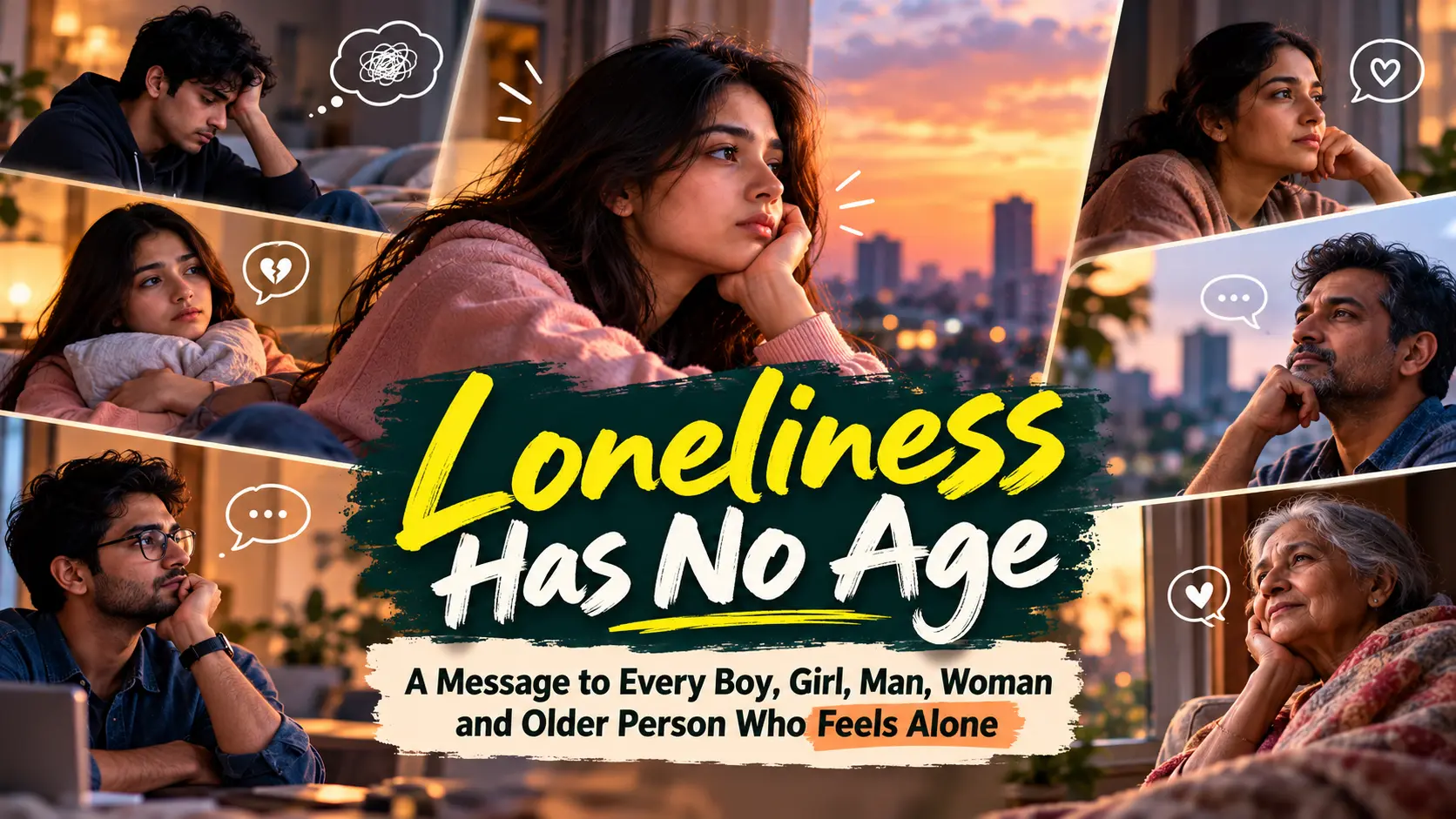
Sometimes, the loneliest people are not the ones sitting alone. They are the ones who have learned to hide how lonely they feel.
There is a kind of loneliness that is difficult to explain.
You can wake up in a house full of people and still feel alone. You can have hundreds of followers, dozens of contacts, and messages waiting on your phone, yet have nobody you feel comfortable telling the truth to.
You can laugh with your friends while carrying sadness inside. You can spend the entire day helping other people while quietly wishing someone would ask how you are doing. You can be the person everyone depends on and still wonder who you can depend on when life becomes difficult.
And sometimes, there is no particular reason you can identify. You simply feel disconnected. You wish someone would notice, sit beside you, and say, “You don't have to pretend with me.”
“You can spend the entire day helping other people while quietly wishing someone would ask how you are doing. You can be the person everyone depends on and still wonder who you can depend on when life becomes difficult.”
If any of this sounds familiar, this blog is for you.
It is for the boy who feels he must always be strong. It is for the girl who cries quietly at night. It is for the young adult who feels left behind while everyone else seems to be moving forward. It is for the man who has never learned how to talk about his feelings. It is for the woman who takes care of everyone but rarely feels cared for herself. And it is for the older person whose home has become quieter than it used to be.
Loneliness does not belong to one age, one gender, one family, or one kind of person. Anyone can experience it, and everyone deserves to be treated with kindness when they do.
1. To the Boy Who Thinks He Must Always Be Strong
Dear boy,
Perhaps people have told you to be brave. Maybe you have heard that boys should not cry, that you must handle your problems yourself, or that showing sadness makes you weak.
So you keep things to yourself.
When something hurts you, you say nothing. When someone disappoints you, you pretend it doesn't matter. When you feel lonely, you distract yourself with games, videos, work, or endless scrolling.
You may even laugh at jokes about your feelings because explaining the truth seems more difficult.
But you are allowed to have feelings.
You are allowed to miss someone. You are allowed to feel rejected, confused, disappointed, or afraid. You are allowed to admit that something hurts.
You do not have to become emotionless to become strong. Strength can also mean asking for help, telling someone that you are struggling, or admitting that you do not have all the answers.
If you are a boy who has been keeping everything inside, consider talking to someone you trust. It might be a friend, a sibling, a parent, a teacher, or another person who treats you with respect.
You do not have to tell them everything at once. You can begin with one sentence:
“I'm not feeling like myself lately. Can we talk?”
Your feelings are not something you need to apologize for.
2. To the Girl Who Smiles in Public but Cries in Private
Dear girl,
Maybe people know you as the cheerful one. The person who makes others laugh, listens to everyone's problems, and says everything is okay.
Perhaps you have become so good at hiding your feelings that people rarely notice when you are struggling.
You might be dealing with friendship problems, relationship disappointments, family expectations, insecurity, loneliness, or the feeling that nobody really understands you.
You may compare your life with the lives you see online. Everyone appears to have close friends, exciting plans, loving relationships, and beautiful memories. And you wonder why your own life sometimes feels so empty.
But remember that you see only a small part of other people's lives. Their photographs cannot tell you everything they experience privately.
You do not have to look happy every moment to deserve love and respect. You do not have to be beautiful enough, successful enough, popular enough, or helpful enough to deserve a person who listens to you.
You are more than the image other people see.
If you feel lonely, give yourself permission to acknowledge it. Talk to someone who respects your boundaries. Spend time with people who allow you to be honest instead of demanding that you always appear happy.
And if you are not ready to explain what you feel, you can start by writing it down. You deserve relationships in which you can laugh freely and speak honestly about the difficult days, too.
3. To the Young Adult Who Feels Left Behind
Dear young adult,
Perhaps you are in college, searching for a job, starting your career, or trying to understand what you want from life.
You open social media and see people travelling, celebrating achievements, getting married, earning money, and apparently living the lives they dreamed of. Meanwhile, you are trying to figure things out.
Maybe you are worried about your future. Perhaps your friendships have changed. You may have moved to a new place where you know nobody, or you might still live in the same neighbourhood but feel increasingly distant from people you once knew.
There is a particular kind of loneliness that can come from believing everyone else has found their place while you are still searching for yours.
But life is not a race with one timetable. People grow at different speeds. Relationships change. Plans fail. New opportunities appear when you least expect them.
- You are allowed to be uncertain about your future.
- You are allowed to take longer than you expected.
- You are allowed to need companionship while you work things out.
Instead of judging your life entirely by what other people appear to have achieved, ask yourself a different question:
“What would make my life feel a little more meaningful right now?”
Maybe the answer is a conversation with an old friend. Maybe it is joining a group, developing a skill, spending time outdoors, or speaking honestly about a worry you have been carrying.
You do not need to have your entire life figured out before you deserve connection.
4. To the Adult Who Has Responsibilities but Nobody to Confide In
Dear adult,
People may depend on you. You may have a job to do, bills to pay, family responsibilities, and countless decisions to make. Perhaps you are the person others turn to when something goes wrong.
You have learned to keep going because there are things that need to be done.
But who listens when you are tired? Who asks what you are worried about, beyond whether you can manage the next responsibility?
Sometimes, adulthood can make it difficult to build and maintain close relationships. Work consumes time. Family obligations increase. Friends move away. Conversations become focused on responsibilities rather than personal experiences.
You may even feel guilty about being lonely because you believe you should be grateful for what you have.
Gratitude and loneliness can exist at the same time.
You can love your family and still need someone outside your household to talk to. You can appreciate your career and still feel overwhelmed. You can care deeply for others and still need care yourself.
You are not required to carry every difficulty silently just because other people depend on you.
Consider making room for honest conversations in your life. Reconnect with a friend. Talk to someone you trust. Ask for help when responsibilities become too much.
You deserve to be known as a person, not only as the person who gets everything done.
5. To the Woman Who Takes Care of Everyone but Herself
Dear woman,
Perhaps you are the person who remembers everyone's needs. You check on your parents, support your partner, care for your children, help your friends, and manage responsibilities that other people may not even notice.
You may be used to putting your own feelings aside because someone else needs you.
Over time, you might find yourself wondering whether anyone notices when you are struggling. Perhaps people assume you can manage everything because you always have. Perhaps you have stopped asking for help because you are afraid of being misunderstood or dismissed.
You can love the people in your life without ignoring your own emotional needs.
You do not have to earn the right to rest by exhausting yourself first. You do not have to wait until you cannot manage anymore before telling someone that you need support.
Try telling a trusted person what you have been experiencing, rather than waiting for them to notice on their own. You might say:
“I've been taking care of a lot lately, and I could really use someone to talk to.”
It is okay to ask for companionship, understanding, and practical help. Your feelings matter, too.
6. To the Older Person Whose World Has Become Quieter
Dear older friend,
Perhaps your life has changed in ways you never expected. Your children may live far away. Your friends may have moved, become less available, or passed away. Retirement may have changed your daily routine. The house that once seemed full of conversation may now feel unusually quiet.
You may have beautiful memories of the past, but you might miss the simple things: someone asking about your day, sharing a cup of tea, discussing the news, or sitting beside you without needing a special reason.
Sometimes, people assume that older adults are comfortable being alone or that loneliness is simply an unavoidable part of ageing. But older people have emotional needs, interests, hopes, and a desire for connection just like everyone else.
Your stories still matter. Your experiences still matter. Your presence matters.
If you are feeling isolated, consider reaching out to a family member, neighbour, old friend, community group, or local organisation. A regular phone call or shared activity may offer an opportunity to reconnect.
If travelling or getting out of the house is difficult, accessible phone and online conversations may provide another way to stay in touch, provided you feel comfortable using them.
And if you know an older person who spends a lot of time alone, do not wait for a special occasion to contact them. Ask how they are doing. Listen to their stories. Give them time to speak.
Sometimes, a small act of attention can mean more than we realise.
7. To the Person Who Has People Around but Still Feels Alone
This message is for anyone who does not see themselves in just one category.
Maybe you are a teenager, a parent, a student, a professional, a single person, a married person, or someone who has recently experienced a major life change.
You may have a busy social life and still feel emotionally disconnected. You may have people who care about you but struggle to tell them what is happening inside your mind. You may be surrounded by conversation but miss the feeling of being understood.
Loneliness does not always mean that nobody is present. Sometimes, it means you are missing the kind of connection you need.
You might wish someone would listen without interrupting, respect your privacy, or allow you to express a thought without immediately judging it. You might not need advice. You might simply want to say what has been difficult.
If this describes you, try to identify what kind of connection you are missing:
Sharing simple, calm moments together.
A bond where you don't have to filter your words.
Talking about real emotions rather than daily routine.
Support without rushed advice or unsolicited criticism.
Understanding what you need can help you decide what step to take next. You cannot control how every person responds to you. But you can look for relationships and communities where mutual respect, honesty, and kindness are possible.
8. Why Is It Sometimes So Difficult to Ask Someone to Listen?
If talking could help, why do so many people keep everything inside?
There is no single answer. Some people worry about being judged. Others have learned to solve problems independently and feel uncomfortable asking for help. Some have tried to open up before and received an unkind response. Others do not know how to describe what they are feeling.
You might even tell yourself that your problems are not serious enough to mention.
But you do not have to compare your difficulties with someone else's before deciding whether you deserve a conversation. You also do not have to share your private thoughts with someone who makes you feel unsafe.
The goal is not to tell everyone everything. It is to find appropriate ways to express yourself and receive support when you need it.
Here are a few ways to begin:
You can begin with one sentence. You do not need to tell your entire story in one day.
9. What If You Have Nobody to Talk To Right Now?
Perhaps you have read this far and thought, “I understand all of this, but I genuinely don't have anyone I feel comfortable talking to.”
That can be a painful situation.
Maybe your friends are unavailable. Maybe your family does not understand your feelings. Maybe you have recently moved somewhere new, or you are still trying to build relationships in your life.
You do not need to pretend that finding someone is always easy. Start with what is possible today:
1. Put pen to paper
Write down what you wish you could tell someone. Getting thoughts outside your head brings emotional relief.
2. Contact an old friend
A quick text to someone you lost touch with often rekindles a supportive connection.
3. Join an interest group
Participate in a local or online community around books, art, hiking, or shared hobbies.
4. Listener & support platforms
Explore safe conversation platforms or look for local support groups with verified peer privacy.
If someone does not respond, remember that their availability does not determine the value of your feelings. Building meaningful connections can take time. It is okay to try different ways of meeting people and finding support.
And if your loneliness is persistent, deeply distressing, or interfering with everyday life, speaking with a qualified mental health professional can be an important step. You do not have to wait until you feel completely overwhelmed before asking for help.
10. A Small Message to Anyone Reading This at Night
Perhaps you are reading this in bed while everyone else in your home is asleep. Perhaps you have been scrolling for hours because you do not want to sit quietly with your thoughts. Perhaps you are waiting for a message from someone who has not replied.
Or perhaps nothing specific has happened today. You simply feel alone, and you are trying to find words for something you cannot quite explain.
Wherever you are, take a moment. You do not need to solve your entire life tonight.
You do not need to decide what your future will look like, repair every relationship, or find all the answers before morning.
If you can, put your phone down for a moment, take a few comfortable breaths, drink some water, or write down what is on your mind.
“Are you awake? I could use someone to talk to.”
You do not need to make the message dramatic or explain everything.
If nobody is available, think about another source of support you can reach out to when it becomes possible. Your present circumstances are not the complete story of your life. You are allowed to take things one step at a time.
11. relifX: Because Everyone Deserves a Chance to Be Heard
At relifX, we believe that meaningful conversations should have a place in everyday life.
We recognise that people of different ages and backgrounds may want someone to talk to for different reasons. A student might want to share concerns about the future. A working adult might want to talk about a difficult day. Someone living alone might simply miss having a conversation.
Sometimes, you may prefer speaking with someone outside your usual social circle.
relifX is a conversation platform designed to connect people with real listeners through messaging and voice calls. It offers another way to start a conversation when you want to share your thoughts or express yourself.
Explore relifX App & Web
If you are looking for a way to connect, you can explore the platform and decide whether it suits your needs.

Privacy & Safety: Before using any online service, review its privacy information, safety guidelines, and limitations. Be careful about sharing sensitive personal information with people you have not met.
Important Notice: relifX is a conversation platform, not a substitute for professional mental health care or emergency support. If you are experiencing persistent or overwhelming distress, consider reaching out to a qualified mental health professional.
We cannot promise that every conversation will change your life. But we believe it is worth making space for respectful conversations and meaningful human connection.
12. If You Know Someone Who Might Be Lonely, Reach Out
This blog is not only for people who feel lonely. It is also for the people who care about them.
Maybe you have a friend who has become quieter lately. Perhaps an older relative rarely receives visitors. Maybe a colleague who always appears cheerful has been having a difficult time.
You do not have to know exactly what to say.
You can send a message. You can ask whether they would like to have tea or go for a walk. You can call without needing a special reason. You can listen without immediately trying to fix everything.
If they do not want to talk, respect their boundaries. Let them know that you are available when they feel ready.
And remember that you do not have to become someone's only source of support. If a person is struggling significantly, encourage them to connect with other trusted people or appropriate professional services.
“Hey, I was thinking about you. How have you really been?”
Do not underestimate the value of checking in.
Common Inquiries
Frequently Asked Questions About Loneliness
Can someone feel lonely at any age?
Yes. Children, teenagers, young adults, middle-aged adults, and older people can all experience loneliness. The circumstances may differ, but the need for meaningful connection can exist throughout life.
Why do I feel lonely even when I have friends or family?
Loneliness is not determined only by the number of people around you. You may have relationships but still wish for greater emotional closeness, understanding, or opportunities to speak openly.
Is loneliness something to be ashamed of?
No. Loneliness is a human experience, not a personal failure. You do not need to feel embarrassed about wanting companionship or support.
What can I do if I have nobody to talk to?
Consider contacting someone you trust, reconnecting with an old friend, joining a community, exploring an appropriate listener platform, or seeking professional support. If you use an online service, review its privacy practices and avoid sharing sensitive information unnecessarily.
Can online conversations help me connect with people?
Online messaging and voice calls can provide opportunities to communicate, especially when meeting in person is difficult. The experience depends on the people involved and the service used. Online conversations are not a replacement for professional care when that is needed.
How can I help an older person who seems lonely?
Check in regularly, invite them to share their experiences, help them connect with family or community activities, and ask what kind of companionship they would enjoy. Respect their independence and preferences.
When should I seek professional support?
If loneliness or emotional distress persists, feels overwhelming, or affects your daily activities, relationships, sleep, work, or studies, consider speaking with a qualified mental health professional.
Whoever You Are, You Matter
To the boy who has been told not to cry.
To the girl who smiles while hiding her worries.
To the young adult who feels left behind.
To the man who believes he must handle everything himself.
To the woman who cares for everyone but rarely asks for care.
To the older person who misses the sound of familiar voices.
And to the person who cannot quite explain why they feel alone.
You do not have to prove that your loneliness is serious enough to deserve attention.
You do not need to compare your life with someone else's. You do not need to be successful, popular, wealthy, married, young, or old to deserve meaningful connection.
Your feelings deserve to be treated with respect. You are allowed to ask for help. You are allowed to seek friendship. You are allowed to want someone to listen.
And if you cannot find the right words today, that is okay. Start small. Reach out when you can. Give yourself permission to look for the connections you need.
We cannot promise that life will always be easy or that loneliness will disappear after one conversation. But you can take small steps toward connection, and you do not have to be ashamed of taking them.
You deserve to be heard. You deserve kindness. You deserve meaningful human connection.
One conversation may not change everything, but it can be a place to begin.
relifx Team
A conversation platform connecting real people with verified listeners. Safe, private, and judgment-free.
Read Next Story
Why Do I Feel Lonely Even When I'm Not Alone?
Discover what emotional loneliness really is, 5 reasons it happens, and how to find meaningful, judgment-free connection.
Begin your conversation today.
Download relifX for Android to connect anonymously with verified listeners in private voice calls.